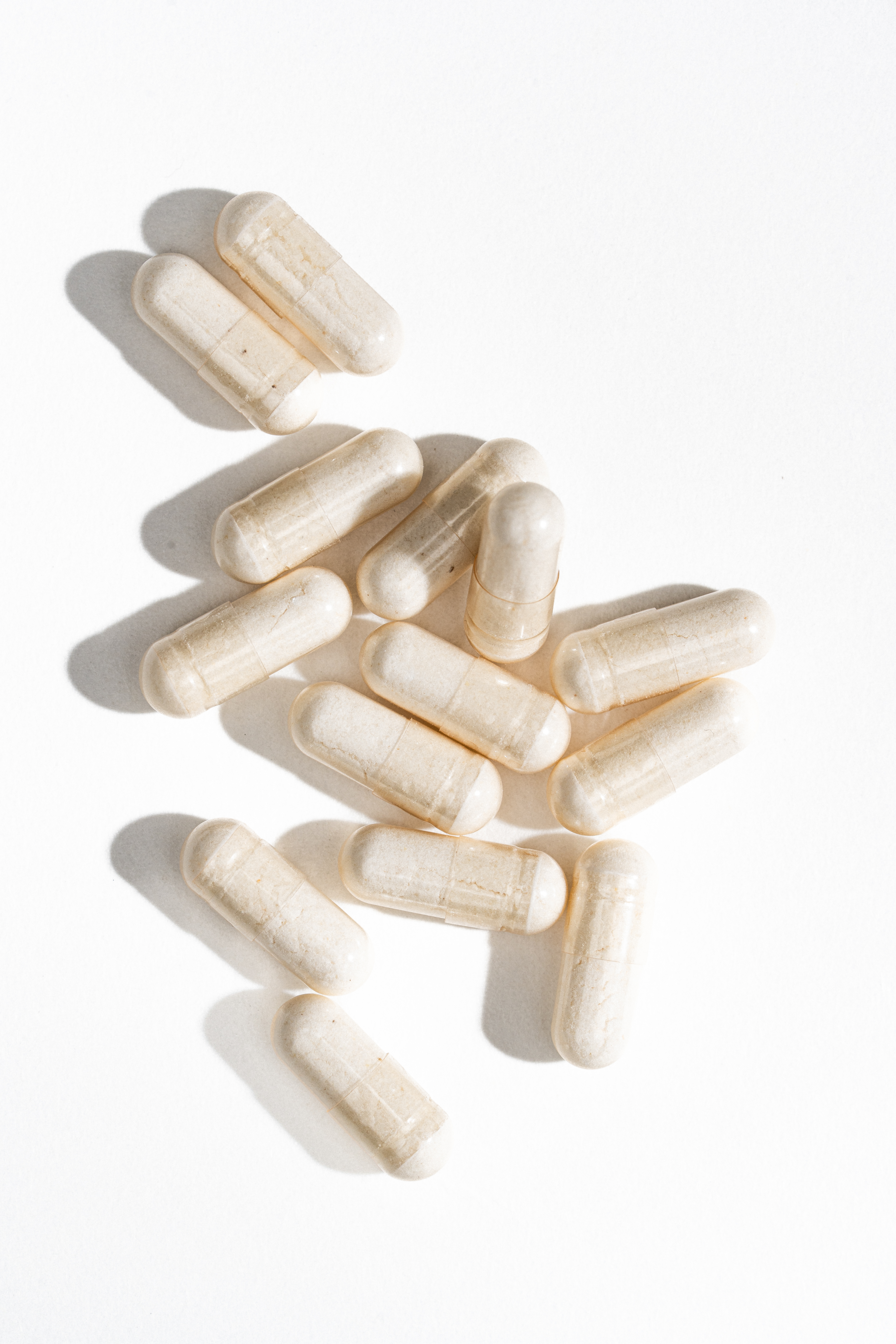
Prospore
Bloating, gas, irregular bowel habits, post-antibiotic recovery, travelers/athletes under microbial stress, immune support, IBD-leaning patients (metabolic endotoxemia).
- Serving Size: 3 Capsules · Servings Per Container: 30 (90 capsules)
- Calories: 5 · Total Carbohydrate: <1 g · Protein: 1 g · Sodium: 5 mg
- Serum-Derived Bovine Immunoglobulin Protein Isolate (ImmunoLin®): 1 g - of which Immunoglobulin G (IgG): 480 mg
- Bacillus coagulans (MTCC5856) (LactoSpore®): 12 mg - 2 Billion CFU
- Bacillus clausii (CSI08): 3 mg - 1 Billion CFU
- Bacillus subtilis (DE111®): 3 mg - 1 Billion CFU
- Other ingredients: Hypromellose (vegetable capsules), Medium Chain Triglycerides, Rice Maltodextrin
- Manufactured for Haven Brands, 1000 N 1710 W, Springville, UT 84663
- Suggested use: 3 capsules per day (back panel)
What it is
A combination gut-support formula pairing serum-derived bovine immunoglobulin (ImmunoLin®, 1 g providing 480 mg IgG) with three clinically studied spore-based Bacillus strains: B. coagulans (LactoSpore®), B. clausii, and B. subtilis (DE111®). The immunoglobulin concentrate binds microbial antigens and toxins in the gut lumen to support barrier integrity (the mechanism behind serum-derived bovine immunoglobulin / SBI use in IBS-D and enteropathy); the Bacillus spores survive stomach acid as dormant endospores and germinate in the proximal small intestine. Shelf-stable, no refrigeration.
⚠️ CORRECTED 2026-06-09 from the actual product label (image HavenSupplements-21-Editcopy.png). The previous entry described Prospore as a spore-only probiotic and compared it to MegaSporeBiotic. The real product's largest ingredient by mass is serum-derived bovine immunoglobulin (ImmunoLin®, 480 mg IgG) - the catalog had missed it entirely. It is an immunoglobulin + 3-strain spore combo, ~4 billion CFU total, NOT a 5-strain MegaSpore analog.What it does (mechanism)
Two life stages. Bacillus exist as dormant endospores (heat/acid/desiccation/UV-resistant - survive cooking, gastric pH 1–2, antibiotic courses, 5+ year shelf life) and active vegetative cells (metabolically active, producing enzymes, bacteriocins, SCFAs). After ingestion: spores transit stomach intact → germinate in proximal small intestine.
Two clinical features that distinguish spores from lactic-acid probiotics: (1) no refrigeration, (2) viability through gastric transit at quantitative recovery (vs ~0.1–10% recovery for typical Lactobacillus/Bifidobacterium).
Strain-by-strain:
- B. subtilis (HU58 / DE111) - broad antimicrobial peptide arsenal (subtilin, surfactin, fengycin); transient mucosal biofilms; digestive enzymes; ↑anti-inflammatory immune cells on ex-vivo LPS challenge of PBMCs
- B. coagulans (GBI-30 6086 / MTCC 5856) - lactic-acid-producing Bacillus; strongest IBS-specific evidence among the three (Hun 2009, Majeed 2016)
- B. clausii (O/C, SIN, N/R, T) - diarrhea specialist; naturally poly-antibiotic-resistant (chromosomal - can co-dose with antibiotics); most-used probiotic in pediatric acute diarrhea internationally
Most clinically distinctive finding for the spore class: reduction in post-prandial LPS / endotoxin translocation (McFarlin 2017: 42% reduction in serum LPS spike, with significant blunting of triglycerides + IL-6/IL-8/IL-12/IL-1β/MCP-1).
Used for
Bloating, gas, irregular bowel habits, post-antibiotic recovery, travelers/athletes under microbial stress, immune support, IBD-leaning patients (metabolic endotoxemia).
Pairs well with
- Prebio Plus - synbiotic combo
- KPV - full gut-inflammation protocol
- Ultromega - gut + cardiovascular inflammation. EPA/DHA reduce IL-6/TNF-α; Prospore reduces LPS translocation. Useful in UC maintenance + Crohn's adjunct (not substitute for biologic/5-ASA). [Practitioner]
- BPC-157 + KPV + Prebio Plus - full gut rebuild (sequencing in stack templates section)
- S. boulardii - practitioner-popular for post-antibiotic + AAD prevention. Different mechanisms (Bacillus = niche/bacteriocin; Saccharomyces = anti-toxin binding, especially C. difficile toxin A/B). Additive.
- Traveling - B. clausii component is the diarrhea-prophylaxis strain; begin 3 days pre-trip through 1 week after return
Dosing
Haven recommended (label protocol)
- Take per Haven label, with food (largest meal preferred - bile-acid release after fatty meal is the strongest natural germinant signal, optimizing dormant-spore → active-vegetative-cell transition)
Practitioner-directed - titration is the practical key [Practitioner]
Titration is more important than absolute dose - most adverse "Herxheimer-like" reactions occur at the starting dose, not later.
- Days 1–7: ½ Haven serving every other day with food (or 1 cap EOD if Haven sells single-cap dosing)
- Days 8–14: ½ Haven serving daily with food
- Day 15+: Full Haven label serving daily with food
- If reactions (bloat, headache, fatigue, brain fog - typical Herx pattern): drop back one step, hold 5–7 days, resume titration. Very sensitive patients (MCAS, severe SIBO, post-mold): start at ¼ serving.
Total Gut Restoration (TGR) full sequence:
- Weeks 1–4: Prospore titration to label dose
- Weeks 5–8: add Prebio Plus titrating
- Weeks 9–12: add mucosal-barrier support (amino acids, IgG, flavonoids)
Timing rationale:
- With food vs empty stomach: spores are acid-resistant either way (germination unaffected). With food preferred - bile-acid release optimizes germination; food slows gastric emptying, more germinant exposure time
- AM vs PM: either; consistency > timing. AM with breakfast most adherence-friendly.
- SIBO precaution: generally well-tolerated in SIBO (spores germinate downstream in distal small bowel/proximal colon, not in proximal small intestine where typical SIBO overgrowth lives). However, a minority (especially methane-dominant/IMO) report flares - drop dose, do not stop, if mild
- Antibiotic co-dosing: spore probiotics CAN be co-administered with antibiotics (spores dormant + most strains intrinsically resistant) - preferred over lactic-acid-probiotic convention of separating by 2 hr
Cycling (practitioner opinion, not RCT-supported): some clinicians cycle 5-on / 2-off or 3-on / 1-off. Continuous 30–90 days is what's been studied.
Cautions / contraindications
- Immunocompromised - most important caution. Rare but documented Bacillus bacteremia case reports (B. clausii, B. licheniformis) in vulnerable hosts. Avoid Prospore in:
- Active hematologic malignancy / chemotherapy-induced neutropenia
- Post-organ-transplant on immunosuppression (relative contraindication; case-by-case)
- ICU patients with central venous catheters (route of probable inoculation)
- Severe gut-mucosal compromise (active GI bleeding, severe IBD flare with ulceration, recent GI surgery)
- Valvular heart disease / endocarditis history - theoretical risk of seeding compromised valves; cautious avoidance standard
- Severe SIBO (methane-dominant) - some flare. Start lowest possible dose; do not push through severe symptoms.
- Quality control - verify Haven's product is third-party tested + confirmed free of Bacillus cereus (the food-poisoning species, NOT the strains in Prospore)
- Pregnancy - B. coagulans GanedenBC30 GRAS; B. clausii (Enterogermina) used clinically in pregnancy in several countries. Reasonable with clinician oversight; avoid new high-dose initiation in first trimester without specific indication.
Key studies & references
- McFarlin BK et al. 2017 - landmark "leaky gut" trial - n=75 screened, "responders" (≥5× post-prandial endotoxin spike) randomized to MegaSporeBiotic vs placebo × 30 days - 42% reduction in post-prandial serum LPS; significant blunting of triglycerides, IL-6, IL-8, IL-12, IL-1β, MCP-1 - World J Gastrointest Pathophysiol 8:117 - DOI 10.4291/wjgp.v8.i3.117
- Colom J et al. 2021 - DE111 ileostomy study, direct demonstration of small-intestinal germination ~3 hr post-dose - PMC8366289
- Hun L 2009 - B. coagulans GBI-30 6086, n=44 IBS, significant ↓pain and bloating - Postgrad Med 121:119 - PMID 19332970
- Dolin BJ 2009 - B. coagulans GBI-30 in IBS-D - PMID 20140275
- Majeed M et al. 2016 - B. coagulans MTCC 5856 in IBS-D, ↓stool freq 45%, ↓pain 68%, ↓bloating 42% - PMC4769834
- Majeed M et al. 2018 - MTCC 5856 IBS + depression - PMC6034030
- Ianiro G et al. 2018 - B. clausii pediatric diarrhea meta-analysis, 6 RCTs n=1298, ↓diarrhea duration 9.12 hr - Nutrients - PMC6116021
- Plomer M et al. 2020 - B. clausii in H. pylori eradication–associated AAD - PMC7680487
---